The Badger Behind the Garden Wall
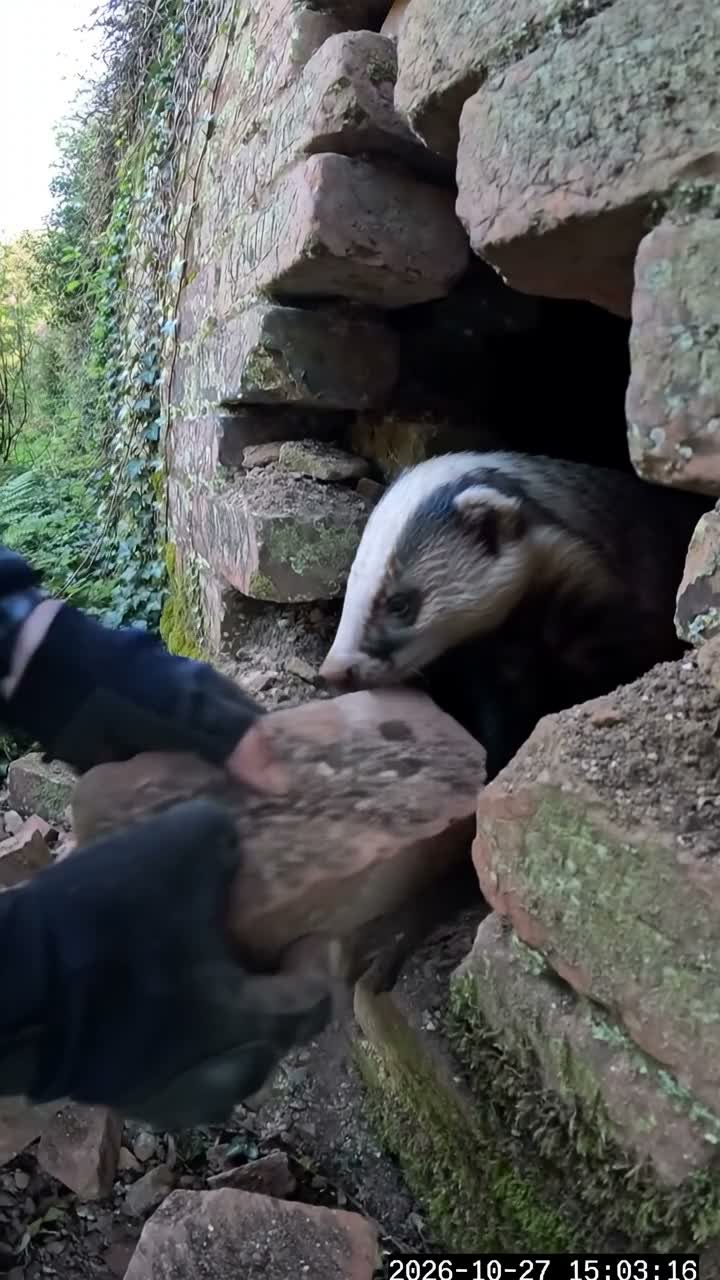
Old countryside garden walls have a particular kind of beauty: stone and brick weathered by decades of rain, patched with moss, leaning slightly, full of gaps and pockets where the mortar has crumbled away. To a human eye, they are picturesque. To a young badger, they can be a maze with only one way in and no way out. The badger in this story had squeezed into a narrow opening in such a wall — perhaps chasing a scent, perhaps seeking shelter — and found itself behind a fall of loose bricks, in a dark gap barely wider than its own body, with the daylight visible only as a thin line beyond the rubble.
When the wildlife rescuer arrived, the badger was watching from the dark, its distinctive black-and-white striped face appearing and disappearing in the gap, its nose working constantly, reading the air for information. Badgers are not animals that panic easily; they are stubborn, powerful, nocturnal creatures, and this one had clearly decided that waiting was wiser than thrashing. But waiting has a limit, and the rescuer could see that the animal was tired, its fur dusty, its movements slower than they should have been.
The rescue was an exercise in patience disguised as manual labour. The rescuer knelt beside the wall and began to remove the loose bricks, one at a time, each one lifted clear and set down softly, away from the opening, so that nothing could tumble back. It was important to go slowly, not only to avoid startling the badger, but because an old wall is a structure in delicate equilibrium: pull the wrong brick and the whole section could shift. Brick by brick, the gap widened. Dust fell in soft clouds. The badger watched, and as the opening grew, its whole posture changed — from pressed-back wariness to forward-leaning curiosity, its head pushing a little further out with each brick removed, as if it were checking whether the world outside was still there.
And then, suddenly, there was a clear passage. The badger did not bolt. Badgers rarely bolt. It moved forward cautiously, its low body close to the ground, and paused at the threshold to sniff the earth — a long, thorough sniff, as if it were reading a newspaper it had missed. Then it walked out, unhurried, into the nearby vegetation, where the grass and the brambles closed around it and it became, within seconds, invisible again: just another wild animal in a hedgerow, where it belonged.
The wall stayed behind, with a neat gap where the bricks had been, and the rescuer stacked the removed bricks to one side for the wall’s owner to rebuild. Nothing was destroyed. Nothing was forced. A creature that had been stuck in the dark was back in the green, because someone took the time to lift bricks one at a time instead of reaching in and grabbing. It is a small parable, if you want one: most of the walls that trap us, animal or human, are not taken down by force. They are taken down brick by brick, by someone willing to kneel in the dust and work slowly, until there is light enough to walk through.
That night, the badger did what badgers do best: it went about its business in the dark, snuffling along hedgerows, digging for earthworms, marking its territory with the confidence of an animal that owns the night shift. It would not remember the wall, or the bricks, or the hands that lifted them. But the garden it returned to was the same garden it had left, and that continuity — the ability to go back to exactly the life it had before — is the quiet gift of a good rescue. The wall’s owner rebuilt the gap the next weekend, with fresh mortar and a small grille over the opening, so that no other young badger would wander into the same trap. A rescue that ends with prevention is the best kind of rescue, because it means the next badger will never need one. And that is how the work compounds: one wall fixed, one gap gridded, one animal at a time, until the countryside is a little less full of traps and a little more full of the wild things that belong in it.
