The Elephant Calf at the Waterhole
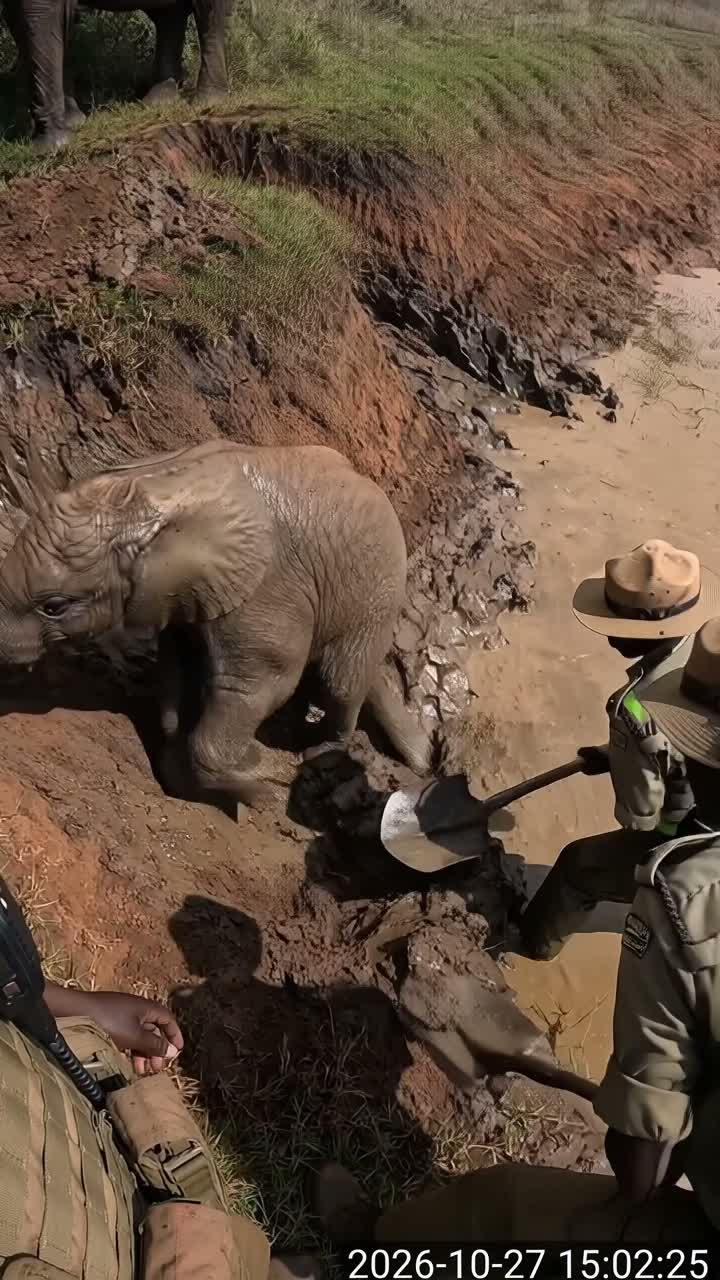
The waterhole had been a gift all dry season, a shallow scoop of muddy water in a landscape that otherwise offered dust and thorn. But waterholes have edges, and edges, when they are made of wet mud, are treacherous for the very young. The elephant calf that got into trouble that day was small — small enough that the slope down to the water was an adventure, and the slope back up was a wall. It had gone down to drink beside the adults, as calves do, and when it tried to return, its front feet slipped on the slick mud, its back feet churned, and it slid sideways into the shallow water, where it stood, soaked and indignant, trying to climb a bank that kept giving way beneath it.
An adult elephant stood nearby, watching. Elephants are famously devoted mothers and aunts, but there are some problems that even an elephant cannot solve by pushing, and a muddy bank is one of them: a panicked adult in the same slippery spot would only make the mud worse. So the adults waited, rumbling low, while the rangers arrived with shovels — an almost comically humble tool for an elephant rescue, and exactly the right one. They worked from a safe distance, in the heat, digging and shaping a shallow exit channel in the bank: a wider, gentler slope, packed firm, with the loose mud cleared away so that small feet could find grip.
It was slow work in the sun, and the calf watched them with the offended dignity of a child who has fallen over in public and would like everyone to stop looking. But as the channel took shape, something changed in the calf’s body language. It stopped struggling against the steep part of the bank and turned toward the new slope, testing it with one front foot, then another, pressing down to see if the ground would hold. It held. The calf leaned forward, dug its toes in, and pushed — and this time, instead of sliding back, it moved up. Inch by inch, with its ears flapping and its little trunk raised for balance, it climbed the channel, its legs trembling with effort, until all four feet were on the grassy edge, on solid ground, where the world was level again.
The adults closed in then, not rushing, just moving near, touching the calf with their trunks, checking it in the thorough, tactile way elephants have. The calf, for its part, shook itself, spraying muddy water in a wide arc, and then walked a few steps on the grass as if to prove to itself that walking was still something it knew how to do. The rangers stepped back, put down their shovels, and watched the small family regroup — because that is what a rescue is for, in the end: not the photograph, not the story, but the moment when a family that was briefly broken by mud and gravity is whole again.
There is a temptation to think of elephant rescues as grand operations, full of cranes and helicopters. Sometimes they are. But most of the time, conservation looks like this: a few people, in the heat, with shovels, reshaping a few metres of muddy bank so that a calf can do what calves are born to do — climb, and walk, and grow up to be the adult standing watch at the next waterhole, for the next calf that slips. The work is passed forward, like the waterhole itself, from one generation to the next.
As the sun dropped, the herd drifted back toward the waterhole, and the calf — now dry, now confident — went with them, walking between two adults as if it were being escorted, which in a sense it was. It drank again, more carefully this time, from the firm edge the rangers had left, and it played briefly with another calf, the two of them bumping shoulders and flapping ears in the clumsy, joyful way young elephants play. The rangers watched from a distance, their shovels over their shoulders, already thinking about the next waterhole, the next bank, the next calf. Conservation is often described in grand terms — corridors, populations, ecosystems — and those terms matter. But on the ground, it looks like this: a channel in the mud, a calf on the grass, a family walking away together into the evening light, whole because someone took the time to shape the earth so that small feet could climb.
