The Seal Pup Between the Coastal Rocks
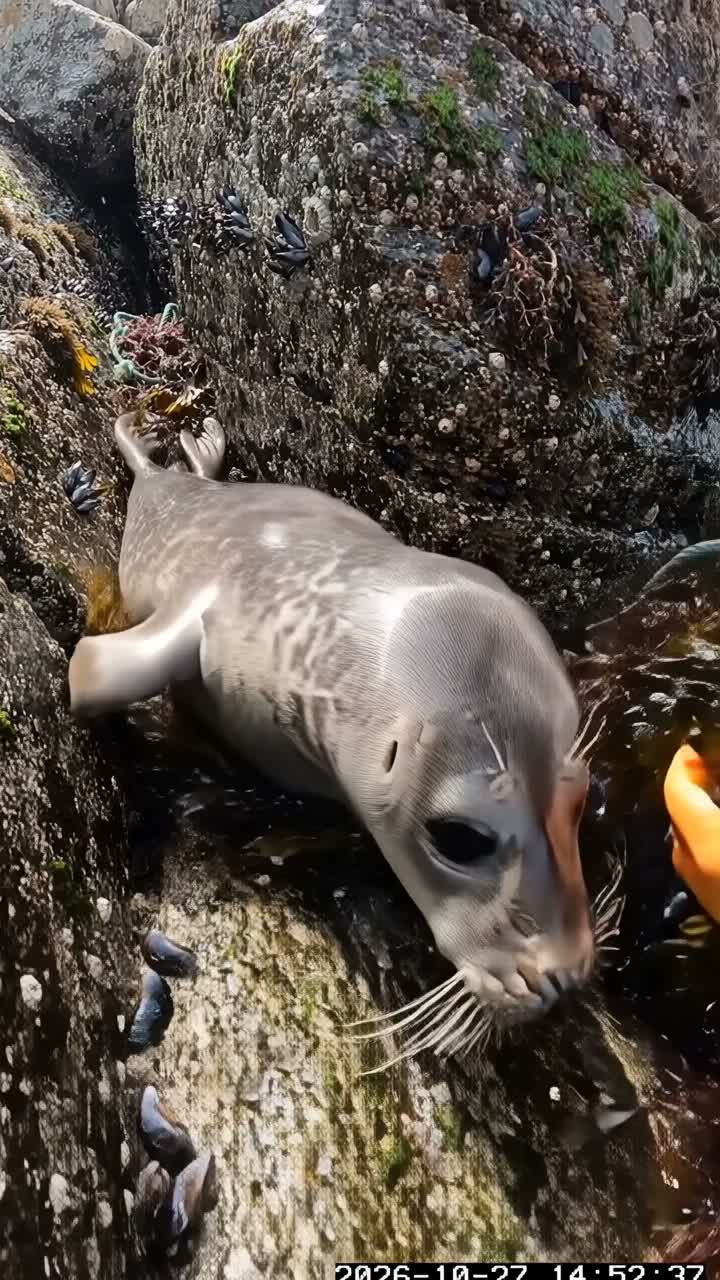
Low tide is a strange, in-between time on a rocky coast. The sea pulls back and reveals a world of rock pools and barnacles, of seaweed draped like wet hair over stone, of narrow gaps and channels that are underwater for most of the day and dry land for a few hours. It was in one of those gaps, between two great coastal rocks, that a young seal found itself stranded as the tide went out. The gap had seemed like a fine place to rest when the water was higher; now, with the water gone, it was a stone corridor with walls too steep to climb and an exit blocked by a tangle of seaweed and a length of discarded rope, washed in by some earlier tide and left there by no one in particular, which is to say, by all of us.
The seal pup lay in the gap, its spotted grey coat still wet, its large dark eyes following the sky, its body rising and falling with breaths that were a little too fast. Seals are not built for rock. They are built for water, for gliding and diving, and on land they move with an ungainly wriggle that looks almost comical until you realise it is also exhausting. The pup had tried to haul itself toward the sea, but the rope and seaweed blocked the way, and the rocks on either side offered no grip for flippers designed for swimming.
The rescuer who arrived worked with the tide clock ticking in the back of their mind — not urgently, because urgency frightens seals, but steadily. First, the debris: the seaweed pulled aside, the discarded rope gathered up and carried away from the gap entirely, so that it could not wash back in and trap something else tomorrow. Then, simply, space: the rescuer stepped back and gave the pup room, because a seal that feels cornered will not move toward the sea, no matter how much it wants to.
And then the pup moved. It was not graceful. It was a series of determined, wriggling heaves, its body undulating over the wet rock, flippers slapping for purchase, until it reached the edge of the gap and felt, for the first time in hours, the slope going down instead of up. From there, gravity and instinct took over, and the pup slid and wriggled its way down to the water’s edge, where the next incoming wave — small, almost gentle — lifted it, and it was swimming again, its head breaking the surface, its body suddenly weightless and sure, as if the hours on the rock had been a bad dream it was already forgetting.
The rope went into a bag, not back into the sea. That is the part of the story that matters most, because the pup was not trapped by nature. It was trapped by something we left behind. Every piece of rope, every net, every plastic fragment that washes into the ocean becomes, sooner or later, a trap for something that never asked to be part of our story. The pup is back in the water now, and that is a happy ending. But the happier ending — the one that would make rescues like this unnecessary — is a coastline where nothing we discard waits in the rocks for the next young seal to find.
By the time the tide came back in, the pup was already far from the rocks, swimming in the open water with the easy, rolling motion that seals are born with, surfacing now and then to look back at the shore with dark, incurious eyes. It will spend its first year learning the sea: where the fish run, where the currents pull, which beaches are safe to rest on. It will face real dangers — storms, predators, hunger — dangers that belong to the ocean and have always belonged there. What it should not have to face is our rubbish, lying in wait in the gaps between rocks. Every rope we recover, every net we cut free, every piece of plastic we carry off the beach instead of leaving behind is a trap that never gets set. The pup’s story ended happily because someone happened to be walking that shore at low tide. The next pup’s story should not depend on luck. It should depend on us leaving the coast cleaner than we found it.
