The Foal in the Flooded Stable
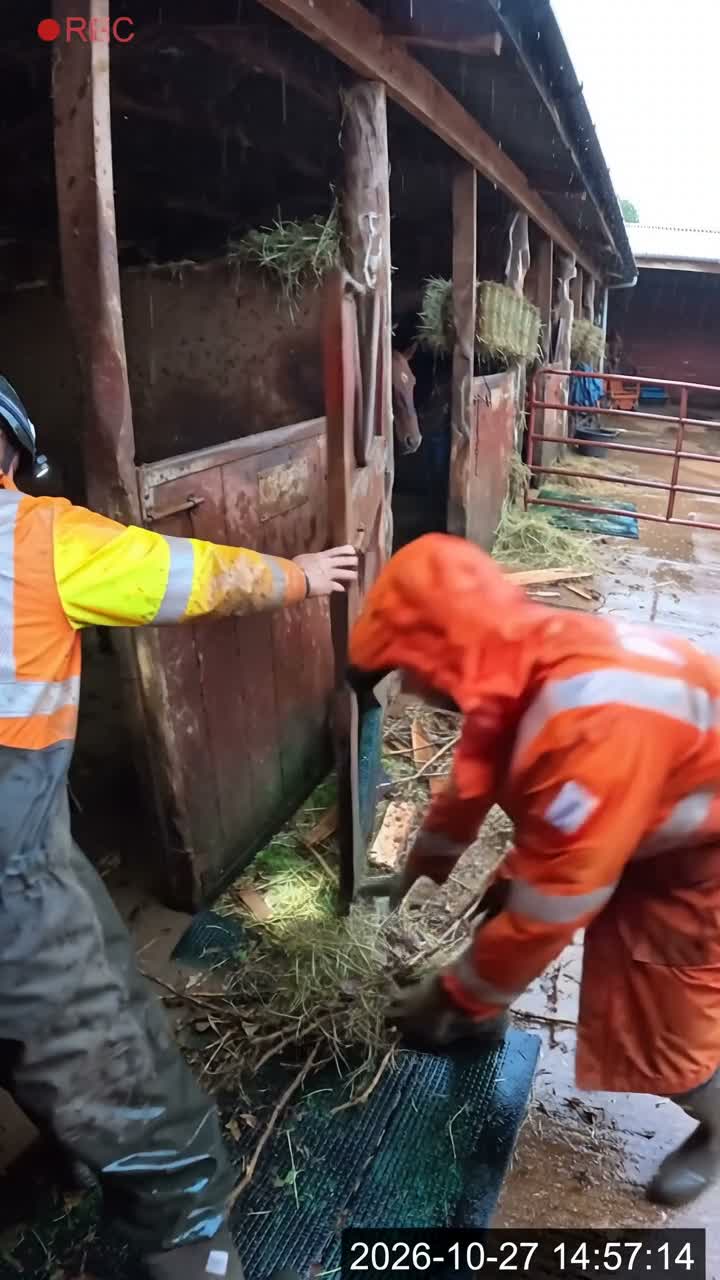
Rain does not ask permission. It falls, and it keeps falling, and the ground, which has absorbed so much, eventually stops absorbing and starts giving back — in puddles, in streams, in water that creeps under stable doors and across straw bedding. The stable in this story had stood through many rains, but this rain was different: heavier, longer, the kind that turns yards into ponds and turns a safe, familiar building into a trap. Inside one of the stalls, standing in water that reached its belly, was a foal — young, chestnut, trembling, its mother in the next stall calling to it over the partition, a sound that was half comfort and half alarm.
Foals are not built for standing in cold water. They lose heat quickly, their legs tire, and the longer they stand, the weaker they become. The foal had tried to move, but the stall was a box, and the water had turned the straw to a sodden mat that slipped under its hooves. It stood in the corner, pressed against the wall, while the water rose and fell with each fresh downpour, and its mother, who could hear it but not reach it, grew more frantic with every minute.
The rescuers arrived in rain gear, boots squelching, and they worked with the methodical calm that flood work requires. First, the gate: they unlatched it and swung it open, clearing the sodden straw and debris that had jammed it shut. Then they made a path — not with anything fancy, just by moving the worst of the waterlogged bedding aside and laying down a strip of dry matting from the stall to the yard. And then, crucially, they stepped back and let the mare’s voice do the rest. A foal will follow its mother through almost anything, and the rescuers knew that the most powerful tool they had was not a rope or a halter, but the sound of a mother calling her baby home.
It worked the way the best rescues work: slowly, then all at once. The foal took one hesitant step onto the matting, then another, its legs wobbling, water streaming off its coat. It slipped once, caught itself, and then, with the mare’s calling growing louder and more urgent, it walked — actually walked — out of the stall, across the yard, and into the dry shelter where its mother was waiting. The reunion was immediate and physical: noses touching, the mare nuzzling the foal’s neck and sides, licking the water from its coat, as if she were trying to groom the whole terrifying morning away.
The rain was still falling when the team left. It would fall for hours yet, and the stable would need draining, and the bedding would need replacing, and the yard would need days to dry. But the foal was dry, and warm, and beside its mother, and that was the part that mattered. Floods will come again — they always do — but so will the people in rain gear, with their matting and their patience, who understand that sometimes the bravest thing you can do in a flood is not to carry the frightened creature out, but to open the gate, lay down a dry path, and let a mother’s voice lead it home.
By the next morning, the rain had eased to a drizzle, and the stable yard was a patchwork of puddles reflecting a pale sky. The foal was dry, its coat fluffed, its legs steady, and it was already doing what foals do when they feel safe: testing its legs with short, springy bucks in the dry corner of the yard, while its mother watched with the long-suffering patience of a parent who has already forgiven the morning’s drama. The stable owner arrived with fresh straw and a pump, and the work of putting the place back together began — drains cleared, bedding replaced, the gate that had jammed repaired so it would never jam again. Floods are not defeated; they are endured, and then cleaned up after, and the measure of a place is not whether it floods, but whether, when it does, someone opens the gate in time. On this morning, someone did, and a foal that could have spent the night standing in cold water woke up dry, beside its mother, ready to be young again.
