How Audiences Around the World Are Rejecting Sexually Explicit Music
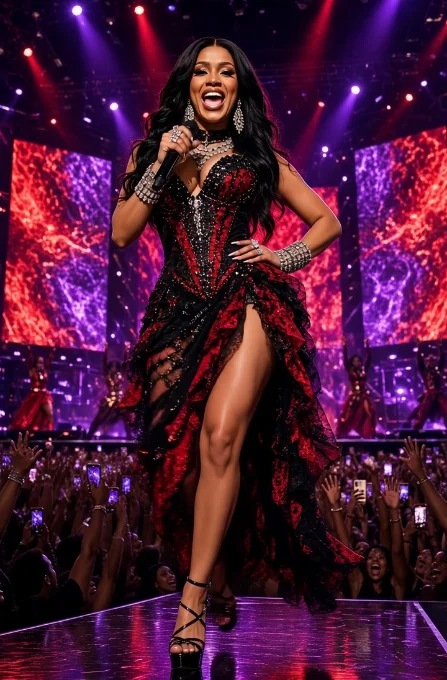
From Cardi B and Britney Spears to Miley Cyrus and South Korean K-pop performers, sexually provocative music has repeatedly triggered public backlash, parental complaints, and debates about the influence of popular culture on younger audiences.
The controversy surrounding explicit lyrics and provocative stage performances has become a recurring issue in the global entertainment industry. While many artists view sexual expression as a form of creativity and personal freedom, critics argue that certain songs and performances can negatively influence children and teenagers.
In the United States, several high-profile musicians have faced criticism from parents, advocacy organizations, and conservative commentators who believe the entertainment industry has increasingly crossed boundaries of acceptable content.
One of the most prominent examples occurred in 2021, when Cardi B and Megan Thee Stallion performed their hit song WAP at the Grammy Awards.
The performance featured sexually explicit lyrics, revealing outfits, and suggestive choreography. It immediately became a subject of public debate, with reports indicating that the Federal Communications Commission received more than 1,000 complaints from viewers.
Several conservative media personalities also condemned the performance. Television host Tucker Carlson criticized what he viewed as the cultural influence of sexually provocative entertainment, while commentator Candace Owens argued that the performance undermined traditional American values.
Cardi B subsequently faced another wave of criticism after sharing a video on social media in which she quickly stopped playing WAP when her young daughter entered the room.
Some viewers questioned why the rapper appeared to recognize that the song was inappropriate for children while continuing to promote it publicly.
Cardi defended her position, arguing that her music was created for adult audiences rather than children.
“I’m not making music for kids. I make music for adults. Parents are responsible for what their children listen to and watch,” she said.
The debate highlighted a broader disagreement between artists who emphasize creative freedom and parents who believe entertainers should consider the potential impact of their work on younger audiences.
Miley Cyrus and the changing image of a pop star
Miley Cyrus encountered similar criticism as she moved away from her Disney-era image and established herself as an adult pop performer.
In 2010, she released the music video for Can’t Be Tamed, portraying a woman confined inside a cage and presented as an attraction. The video’s imagery generated criticism from the Media Research Center, which published an essay examining what it described as the sexualization of young female celebrities.
Between 2013 and 2015, Cyrus continued attracting controversy through provocative performances at major televised events. The Parents Television Council repeatedly criticized several of her appearances, arguing that their sexual content was unsuitable for younger viewers.
Another debate involved Rainbowland, her collaboration with Dolly Parton. The song promotes acceptance and inclusion, but it became controversial when students at the University of Wisconsin wanted to include it in a spring concert. University officials reportedly declined to approve the performance amid concerns about potential controversy.
Britney Spears faced criticism long before the current generation of pop stars
Britney Spears was another major artist whose performances became targets of parental criticism.
In 2001, when Spears was 19, she released I’m a Slave 4 U. The song and its provocative stage performances generated considerable discussion about sexual imagery in mainstream pop music.
Parent advocacy groups expressed concern about the track’s suggestive lyrics and choreography, arguing that the singer’s enormous popularity among teenagers made the issue particularly significant.
The controversy continued years later when the television series Glee featured performances inspired by Spears’ music, including I’m a Slave 4 U and Toxic.
In 2010, the Parents Television Council criticized the program for incorporating sexually suggestive material into a show that attracted a substantial younger audience.
The legal battle over explicit hip-hop music
The controversy surrounding sexually explicit music has occasionally gone beyond public criticism and entered the courtroom.
In 1989, the hip-hop group 2 Live Crew released its album As Nasty as They Wanna Be, which became the subject of a landmark obscenity dispute in Florida.
A federal court initially declared the album obscene, citing its explicit sexual content. Some retailers faced prosecution for selling the record, while members of the group were arrested after performing in Broward County.
The case became an important example of the tension between artistic freedom and attempts to regulate sexually explicit entertainment.
It also raised questions about whether government authorities should have the power to determine which forms of artistic expression are acceptable for public consumption.
South Korea’s K-pop industry faces similar criticism
The debate is not limited to Western music. South Korea, home to one of the world’s most influential pop industries, has also experienced repeated controversies involving provocative performances and suggestive lyrics.
In early 2024, girl group (G)I-DLE attracted attention with its song Wife. The track’s lyrics and music video sparked discussions about whether it should receive a 19-plus age classification because of its sexual references and suggestive imagery.
Some parents expressed concern about the song’s accessibility to younger fans, particularly because the group has a significant following among school-age audiences.
Singer Hwasa also faced public criticism following a provocative performance at a university festival. A parents’ and students’ rights organization filed a complaint alleging that her choreography crossed acceptable standards of public decency. The controversy eventually led to police questioning.
Her stage styling also attracted criticism from people who believed certain outfits and performances unnecessarily sexualized school-uniform imagery.
Meanwhile, groups such as Girl Crush and Stellar gained attention through revealing costumes and provocative concepts. Although these approaches generated considerable publicity, public controversy did not necessarily translate into long-term commercial success.
Artistic freedom versus social responsibility
The repeated controversies surrounding Cardi B, Miley Cyrus, Britney Spears, and numerous K-pop performers demonstrate that the debate over explicit entertainment is not going away.
Supporters argue that musicians should have the freedom to explore adult themes, challenge social expectations, and express themselves without unnecessary censorship.
Critics, however, believe the growing accessibility of music videos, streaming platforms, and social media makes it increasingly difficult to prevent children from encountering mature content.
Ultimately, the disagreement reflects a much larger cultural question: Should the responsibility for protecting young audiences belong primarily to parents, entertainment companies, or the artists themselves?
As the global music industry continues to evolve, finding a balance between artistic expression and age-appropriate entertainment remains one of its most controversial challenges.
