Downward Dog – Downward-Facing Dog Pose
Introduction
Downward Dog, also known as Adho Mukha Svanasana, is one of the most recognized yoga poses and an essential part of many yoga practices
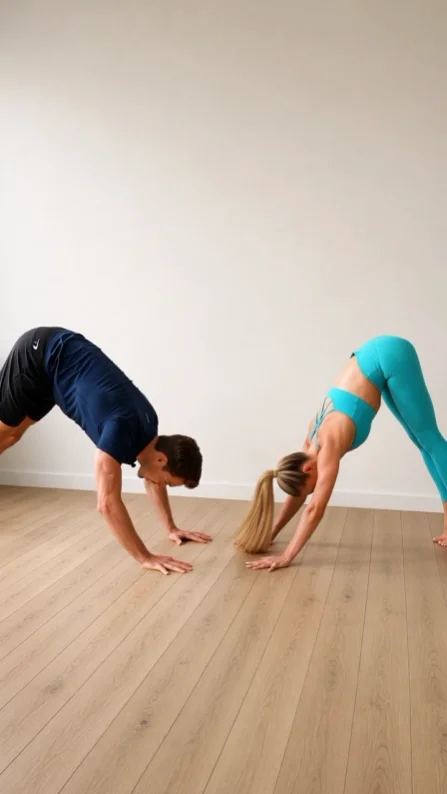
This foundational posture forms an inverted V shape with the body, with the hands and feet pressing firmly into the mat while the hips lift toward the ceiling
It helps stretch the hamstrings, calves, shoulders, and spine while strengthening the arms, legs, and core
Benefits of Downward Dog
Improves flexibility in the hamstrings, calves, and shoulders
Stretches and lengthens the spine
Strengthens the arms, shoulders, wrists, and legs
Builds core stability and body awareness
Improves posture and overall body alignment
Encourages better mobility in the hips and ankles
Helps release tension in the back and shoulders
Develops strength, balance, and coordination
How to Perform Downward Dog
Starting Position
Begin on your hands and knees on a yoga mat
Place your hands shoulder-width apart with your fingers spread wide
Position your knees directly beneath your hips
Keep your back flat and your neck relaxed
Press your palms firmly into the mat
Step-by-Step Instructions
Tuck your toes under and slowly lift your knees off the mat
Push your hips upward and backward toward the ceiling
Straighten your arms and lengthen your spine
Allow your head to relax naturally between your upper arms
Keep your feet about hip-width apart
Press your heels gently toward the floor without forcing them down
Engage your core and distribute your body weight evenly between your hands and feet
Keep your knees slightly bent if your hamstrings feel tight
Maintain a long, straight spine and avoid rounding your back
Hold the position while breathing slowly and steadily
To release, gently bend your knees and lower them back onto the mat
Duration and Breathing
Hold the pose for 30–60 seconds, depending on your comfort level
Repeat 2–3 times during your yoga practice
Inhale as you lengthen your spine and lift your hips
Exhale as you press your hands into the mat and move your hips upward
Maintain slow, deep, and controlled breathing throughout the pose
Important Tips and Precautions
Keep your hands firmly grounded with fingers spread wide
Avoid locking your elbows
Keep your shoulders away from your ears
Do not force your heels to touch the floor
Bend your knees slightly if necessary to maintain a straight spine
Distribute your weight evenly between your hands and feet
Avoid putting excessive pressure on your wrists
Modify the pose or seek professional guidance if you have wrist, shoulder, or back injuries
Stop if you experience sharp pain, dizziness, or discomfort
Conclusion
Downward Dog is an excellent foundational yoga pose that combines stretching, strengthening, and full-body engagement
Practicing this posture regularly with proper alignment and controlled breathing can improve flexibility, strengthen the upper and lower body, and promote better posture and overall body awareness
