The Owl Behind the Fallen Shelving
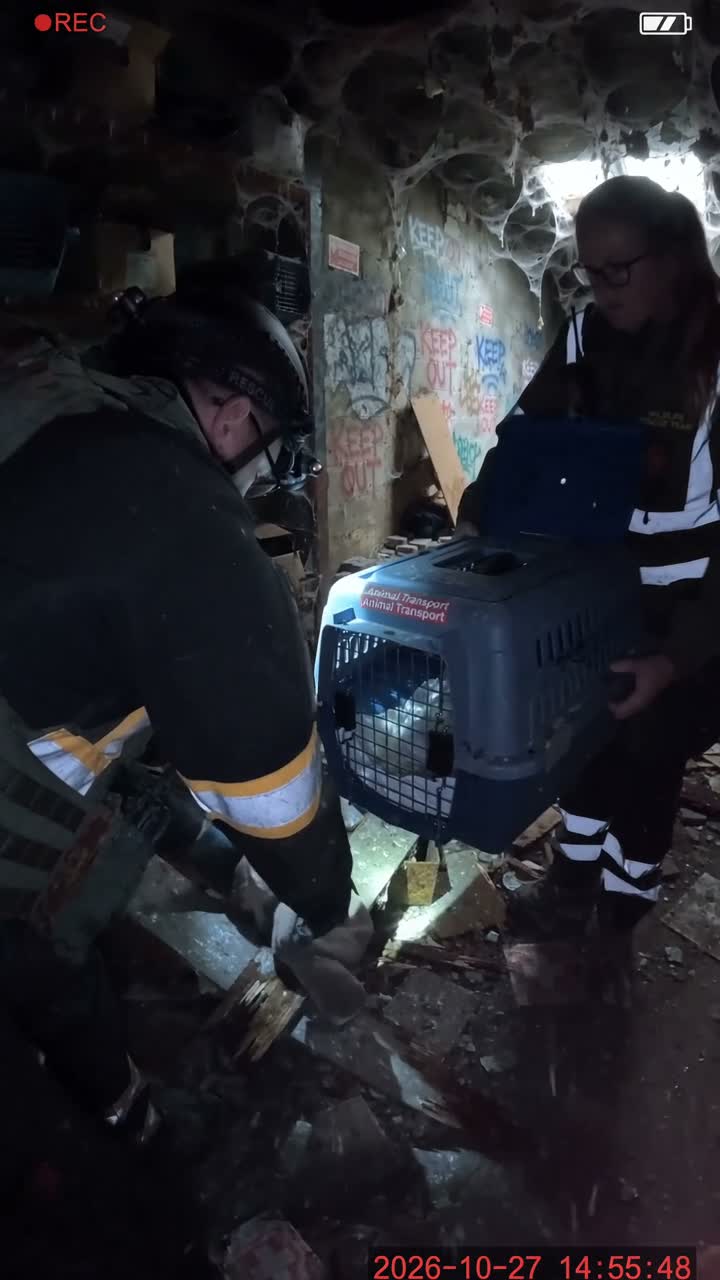
Abandoned warehouses have their own weather. Dust hangs in the air like fog, light comes in through broken roof panels in sharp, dusty shafts, and every sound echoes a little too long. The warehouse in this story had been empty for years, its shelves still standing in some places and collapsed in others, its walls covered in graffiti and cobwebs, its floor scattered with the debris of a business nobody remembered. And behind one of the fallen shelving units, in a pocket of darkness between the wood and the wall, a young owl was hiding — or trapped, which in a place like that can be hard to tell apart.
Owls are masters of stillness. This one had pressed itself into the smallest space it could find, its feathers fluffed, its great eyes open and unblinking, watching the torchlight move across the warehouse as the rescue team searched. It did not call out. Owls in trouble rarely do. They go quiet, and they wait, and the danger of a quiet animal is that it is easy to walk past. But the team had been told an owl was in there, and they searched the way you search for something quiet: slowly, shelf by shelf, checking every gap, until a rescuer’s light found the eyeshine — two round reflections in the dark, staring back.
Getting the owl out meant working around the shelving, not through it. The team lifted and braced the fallen unit so that it could not shift, cleared the smaller debris from the opening, and then, with the patience that owl rescues require, waited for the bird to come to the edge of its hiding place on its own. When it did, they moved with the swift gentleness that handling a raptor demands: a towel over the wings to keep it calm, a secure hold that supports the body without squeezing, and then, within seconds, into a ventilated animal transport carrier, dark and quiet inside, where the owl’s breathing slowed almost immediately.
The carrier was carried out of the warehouse into the daylight, and the contrast was startling: from dust and graffiti and gloom to open sky and fresh air in the space of a doorway. The owl would be checked over, fed, and — if it was uninjured, as the team hoped — released back into the night it belonged to, where it could hunt and fly and be the silent, wide-eyed thing it was born to be. But even before that release, the rescue was already complete in the way that matters: an animal that had been invisible in the dark was seen, and taken seriously, and carried out into the light.
There are thousands of abandoned buildings in the world, and in many of them, something quiet is waiting. Owls, bats, cats, pigeons — creatures that moved in when the humans moved out, and sometimes cannot move out again. They do not ask for help loudly. They ask by being there, in the dark, with their eyes open. And every time someone bothers to search the dark properly, shelf by shelf, until the eyeshine answers back, the world gets a little less lonely for the things that live in it.
That night, after its check-up, the owl was released at the edge of a woodland not far from the warehouse — released properly, at dusk, when owls are meant to fly. The carrier door opened, and for a second the owl did not move, as if it were checking that the dark outside was the right kind of dark. Then it lifted off, silently, the way owls do, its wings making no sound at all, and it rose over the trees and was gone, a shadow among shadows, back to hunting, back to the night shift it was born for. The team stood and watched until they could no longer tell owl from darkness, and then they went home. Warehouses will keep standing empty, and owls will keep moving into them, and the work of searching the dark will never be finished. But on this night, at least, one pair of eyes that had stared out of a gap between fallen shelves was staring out over a woodland instead, free, and the dark it looked into was its own.
