High Lunge – Ashta Chandrasana
Introduction
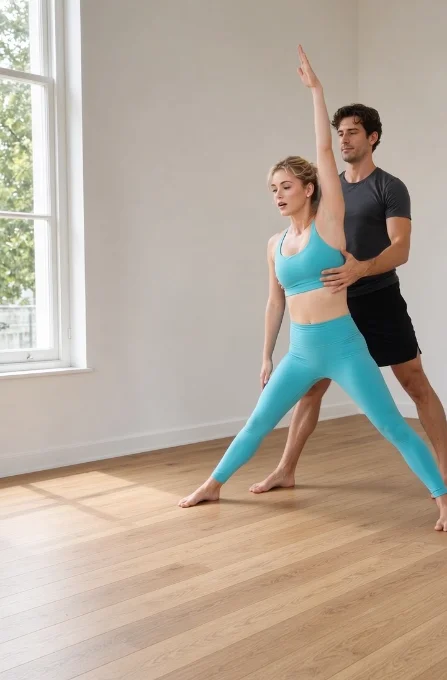
High Lunge, also known as Ashta Chandrasana or Crescent High Lunge, is a dynamic standing yoga posture that builds strength, balance, flexibility, and stability
This pose involves stepping one foot forward and bending the front knee while extending the opposite leg straight behind the body, keeping the back heel lifted off the floor
High Lunge strengthens the legs, stretches the hip flexors, opens the chest, and engages the core while improving balance and body coordination
Benefits of High Lunge
Strengthens the quadriceps, hamstrings, glutes, and calves
Improves balance, stability, and coordination
Stretches the hip flexors and front of the back leg
Opens the chest and shoulders
Strengthens the core and abdominal muscles
Improves posture and spinal alignment
Builds endurance and lower-body strength
Develops concentration and body awareness
How to Perform High Lunge
Starting Position
Begin standing upright at the front of your yoga mat with your feet together
Keep your spine straight, shoulders relaxed, and arms resting naturally at your sides
Engage your core and look straight ahead
Step-by-Step Instructions
Step your right foot backward approximately 3–4 feet
Bend your left knee and position it directly above your left ankle
Keep your right leg extended straight behind you with your right heel lifted
Press the ball of your back foot firmly into the mat
Keep your hips facing forward and your pelvis stable
Engage your core and lengthen your spine
Raise both arms overhead with your palms facing each other
Relax your shoulders and keep your chest lifted
Look forward or slightly upward if comfortable
Maintain your balance while breathing slowly and steadily
To release, lower your hands and step your back foot forward
Repeat the pose with the opposite leg
Duration and Breathing
Hold the pose for 20–30 seconds on each side
Repeat 2–3 times depending on your strength and comfort level
Inhale as you raise your arms and lengthen your spine
Exhale as you bend your front knee and settle into the lunge
Continue breathing slowly and deeply throughout the pose
Important Tips and Precautions
Keep your front knee aligned with your ankle
Avoid allowing your front knee to collapse inward
Keep your back leg strong and your back heel lifted
Maintain a stable and balanced position
Keep your hips facing forward without forcing them
Avoid arching your lower back excessively
Relax your shoulders and keep your neck comfortable
Use a shorter stance if you have difficulty maintaining balance
Place your hands on your hips if raising your arms causes discomfort
Modify the pose if you have knee, hip, or ankle injuries
Stop if you experience sharp pain or discomfort
Conclusion
High Lunge is an excellent yoga posture for developing lower-body strength, improving balance, and increasing hip flexibility
Practicing this pose regularly with proper alignment and controlled breathing can help strengthen the legs and core, improve posture, open the hips, and build greater physical stability and endurance
