The Little Goat on the Narrow Ledge
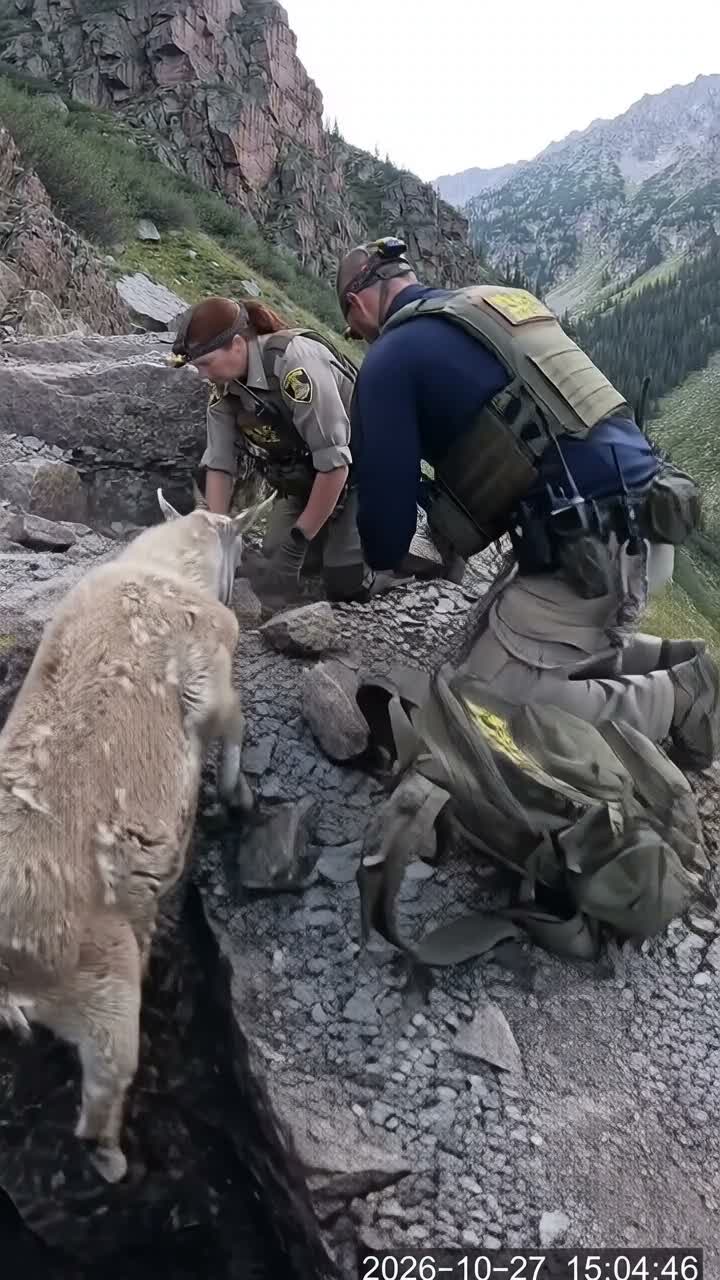
There is a moment on every mountain trail when the path simply stops making sense. The hikers who called it in had been walking a familiar ridge route, the kind of trail where the air smells of pine and cold stone, when they heard it: a thin, trembling bleat coming from below the path, from a place where no animal should have been standing. A young mountain goat, barely more than a kid, had slipped from the trail and landed on a narrow rocky shelf a few metres down. Above it, the trail. Below it, a drop that fell away into pine tops and mist. Beside it, a crack in the rock, and nothing else.
When the ranger team arrived, they did not rush. That is the first rule of mountain rescue, and it is also the hardest one to follow when a young animal is crying below your feet. They lay down at the edge and looked. The goat was pressed against the rock face, its small hooves splayed on loose gravel, its body trembling not only from fear but from the effort of standing still on ground that wanted to slide. Every few seconds it would test a step, then pull back, as if the mountain itself had told it that moving was more dangerous than staying. The rangers could see the problem clearly: the shelf was not a dead end, but the way forward was blocked by a scatter of loose stones that had tumbled down in some earlier storm, covering the natural footholds that would have let the goat climb back up.
So they began the slowest kind of work. Two experienced responders, roped and steady, worked their way down to the shelf from the side, moving with the deliberate care of people who know that one kicked stone can undo everything. They did not reach for the goat. They did not speak loudly. They simply began to clear the stones, one at a time, lifting each loose rock and setting it aside where it could not roll, exposing the solid footholds beneath. It was quiet work, broken only by the wind and the occasional clink of stone on stone. The goat watched them the entire time, its dark eyes following every hand movement, its ears swivelling at every sound. Wild animals do not understand rescue, but they understand calm. And calm, offered consistently, is a language of its own.
Then came the moment that makes this kind of rescue worth telling. With the passage cleared, the goat did not bolt. It stepped forward and pressed one small hoof onto a newly exposed foothold, testing it the way a climber tests a hold, putting weight on slowly, ready to pull back. The hold stayed. It tried another. Then another. Each step was a small negotiation between fear and instinct, and you could see the exact second when instinct began to win. The goat’s body, which had been hunched and tight, started to lengthen. Its neck came up. Its steps, which had been short and stabbing, became longer and more sure.
It climbed the last stretch in a rush of confidence, scrambling up onto the wider ledge above the shelf, and for a moment it simply stood there, breathing hard, looking out over the valley as if seeing it for the first time. Then it turned toward the mountainside and moved off, unhurried now, its white coat bright against the grey rock, until it was just another shape among the stones, exactly where it belonged.
Nobody cheered. Mountain rescuers rarely do. They packed their gear, checked the ledge one last time, and walked back up the trail. But the story stayed with them, as these stories always do, because it is a reminder of something easy to forget: rescue is not always about carrying someone to safety. Sometimes it is about clearing the stones from a path and then stepping back, trusting that the one who was stuck knows how to walk, once the way is open. The goat did the climbing. The humans only made the climbing possible. And in a world that loves dramatic rescues, there is something quietly radical about that kind of help — the kind that does not demand gratitude, does not need a photograph, and leaves no trace except a wider ledge and a young goat, home on the mountainside.
